
Not just a saree.
A story woven by hand.
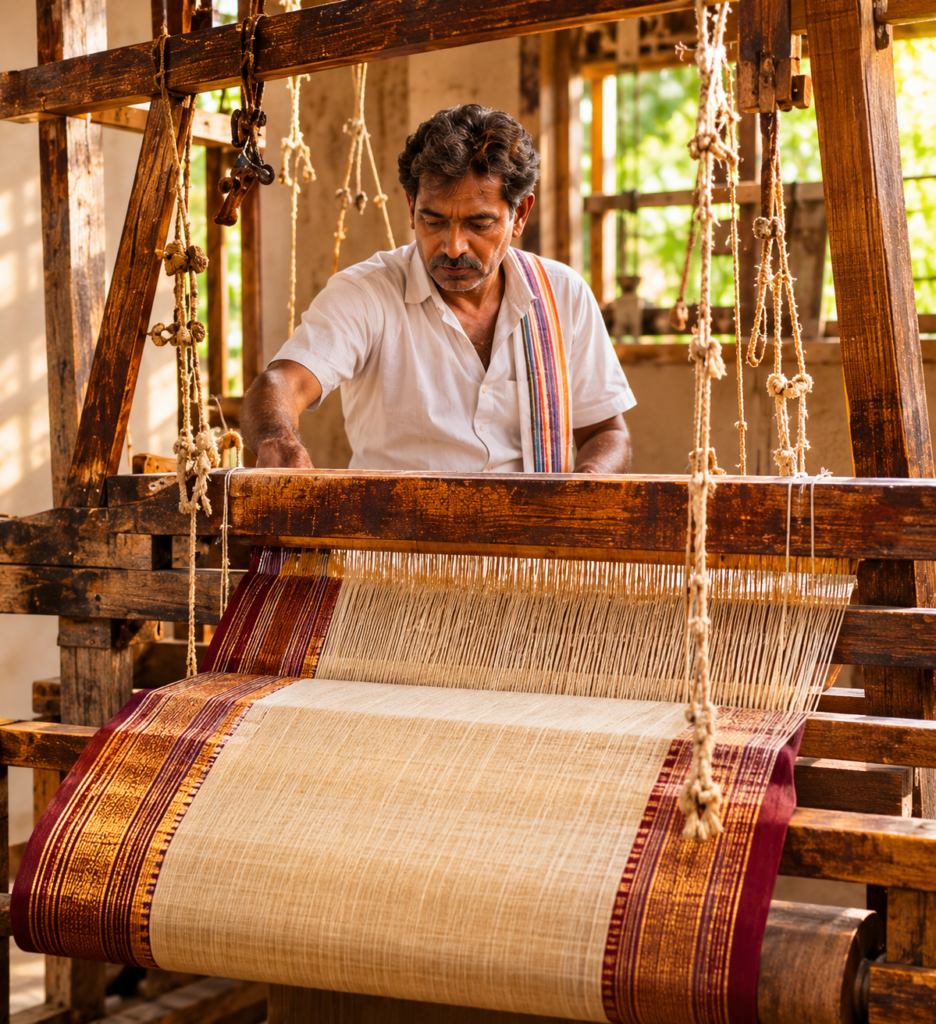
What is a handloom saree?
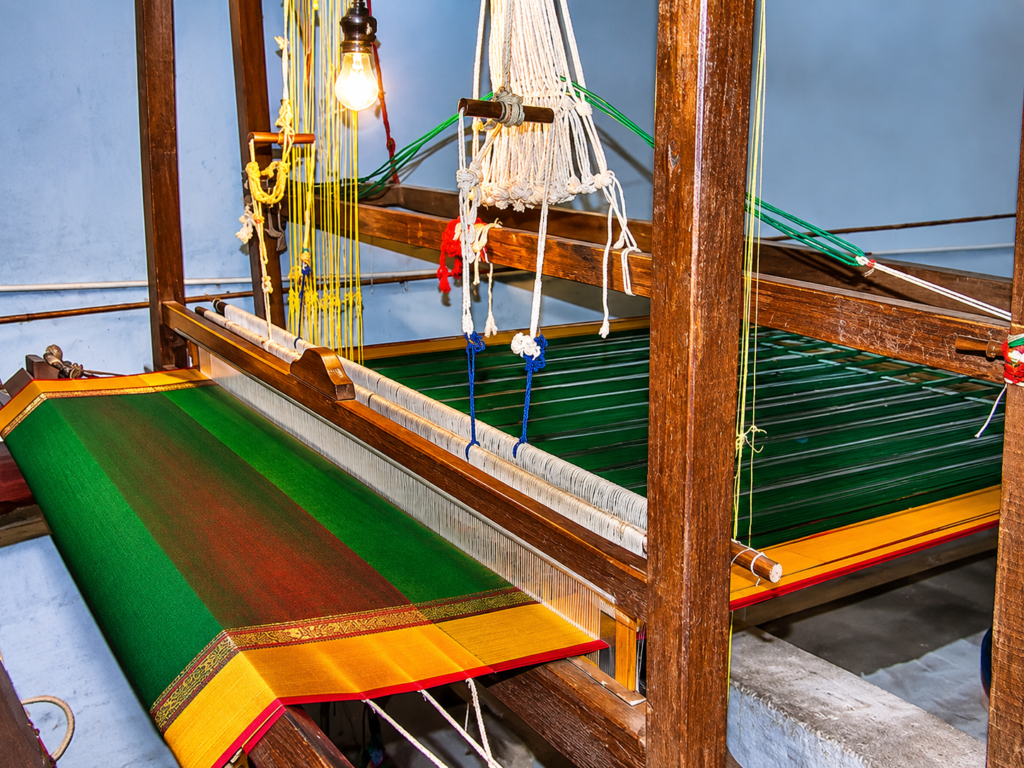
Two directions. One fabric.
Weft — the yarn passed across the warp to build the fabric.
Handloom vs powerloom.
Know the real difference.
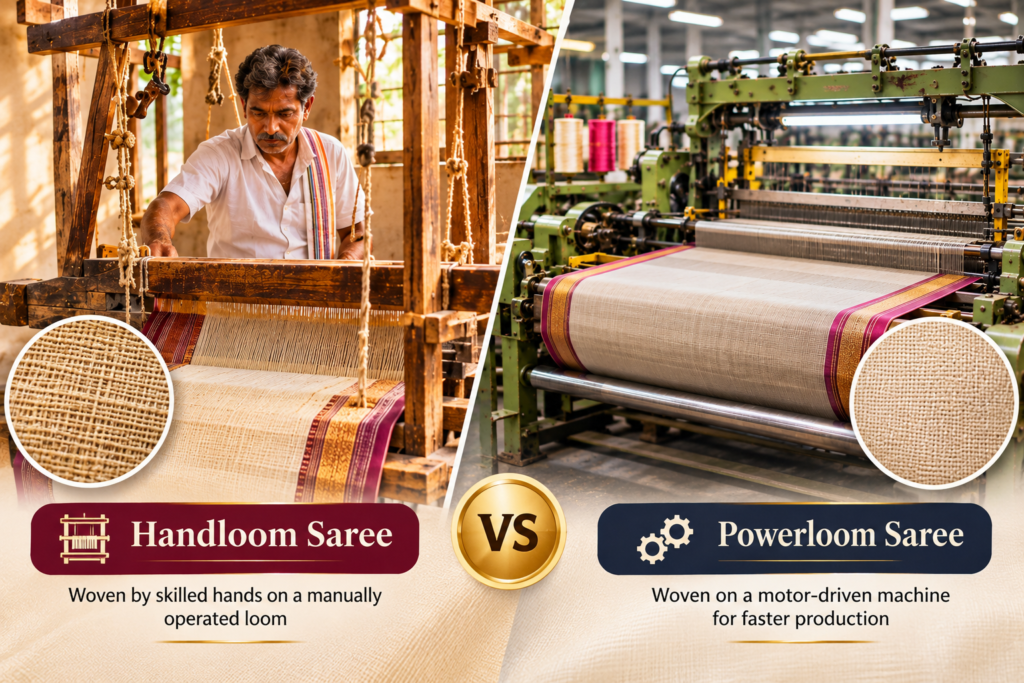
| What changes? | Handloom | Powerloom |
|---|---|---|
| Weaving power | Human effort operates the loom. | A motor powers the weaving motions. |
| Weaver’s role | Directly coordinates and operates the weaving. | Sets up, operates and monitors powered machinery. |
| Production pace | Generally slower; varies with the weave and design. | Generally faster; suited to repeat production. |
| Fabric character | May have subtle variations; fine handweaving can also be uniform. | Often consistent; can also reproduce textured effects. |
| Patterns & designs | Can be simple or intricate. | Can be simple or intricate. |
| Price | Skilled labour, yarn and design affect the cost. | Scale can lower costs; yarn and design still matter. |
| Quality & comfort | Depend on fibre, yarn, weave, finishing and care. | Depend on fibre, yarn, weave, finishing and care. |
The value is in the human touch.
Skill in every pass
Tradition, still evolving
A fabric with character
See the story
behind the threads.
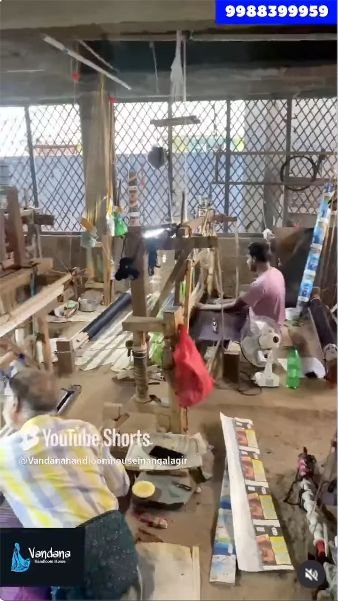 ▷Watch the original on Instagram ↗
Still from @vandanahandlooms’ production reel. Opens the original Instagram video.
Know your loom.
Know your saree.
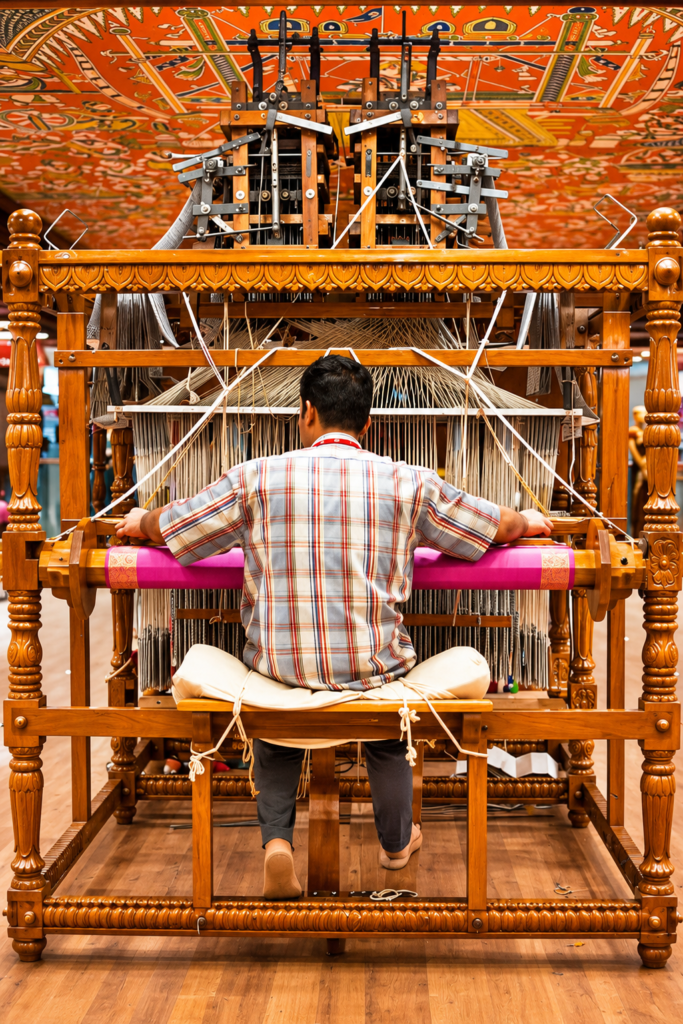
Hand-operated
Pit loom · గుంత మగ్గం
A loom arranged over a pit, with the weaver operating treadles below ground level. This structure is important in traditional Mangalagiri weaving.
Frame loom · ఫ్రేమ్ మగ్గం
A raised wooden or metal frame holds the warp. A handloom version is operated manually.
Throw-shuttle handloom
The weaver passes the shuttle carrying weft from one side to the other by hand.
Fly-shuttle handloom
A cord and picking mechanism propel the shuttle. The weaver supplies the power, so a fly-shuttle mechanism does not make the loom a powerloom.
Jacquard handloom
A hand-operated loom fitted with a mechanism that selects warp threads for intricate patterns, often using punched cards.
Dobby handloom
A manually powered loom with a mechanism that controls groups of warp threads for repeating patterns or borders.
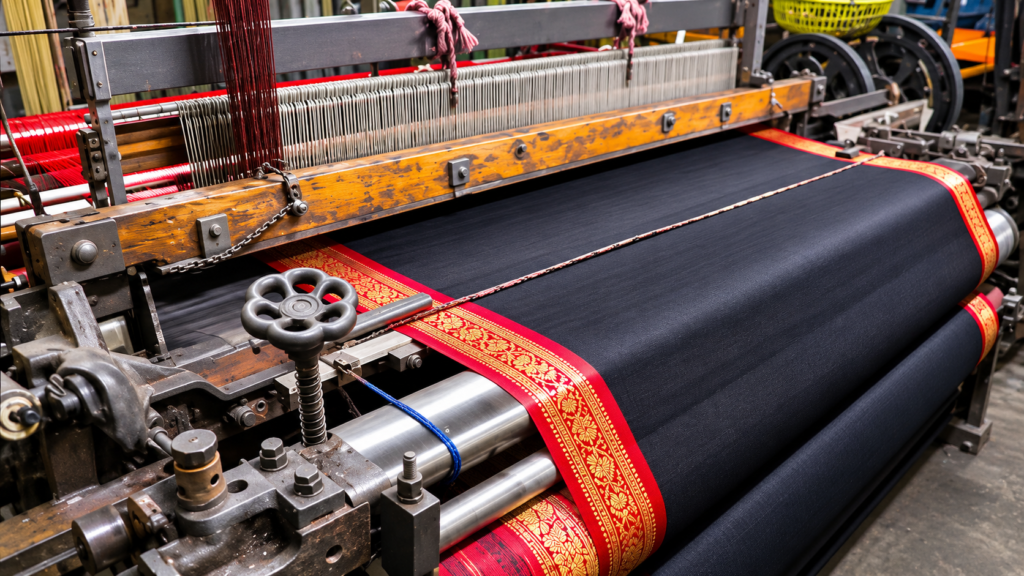
Motor-powered
Shuttle powerloom
A motor drives the weaving motions, including insertion of weft using a shuttle.
Rapier loom
A carrier or pair of carriers transfers the weft through the opening in the warp.
Air-jet loom
Compressed air carries the weft across the warp opening.
Water-jet loom
A jet of water inserts the weft. This method is suited to certain synthetic filament yarns, rather than every saree fabric.
Projectile loom
A small gripper projectile carries the weft across the weaving width.
Electronic Jacquard powerloom
A powered loom with electronic pattern control for complex, repeatable woven designs.
A local tradition.
A distinctive border.
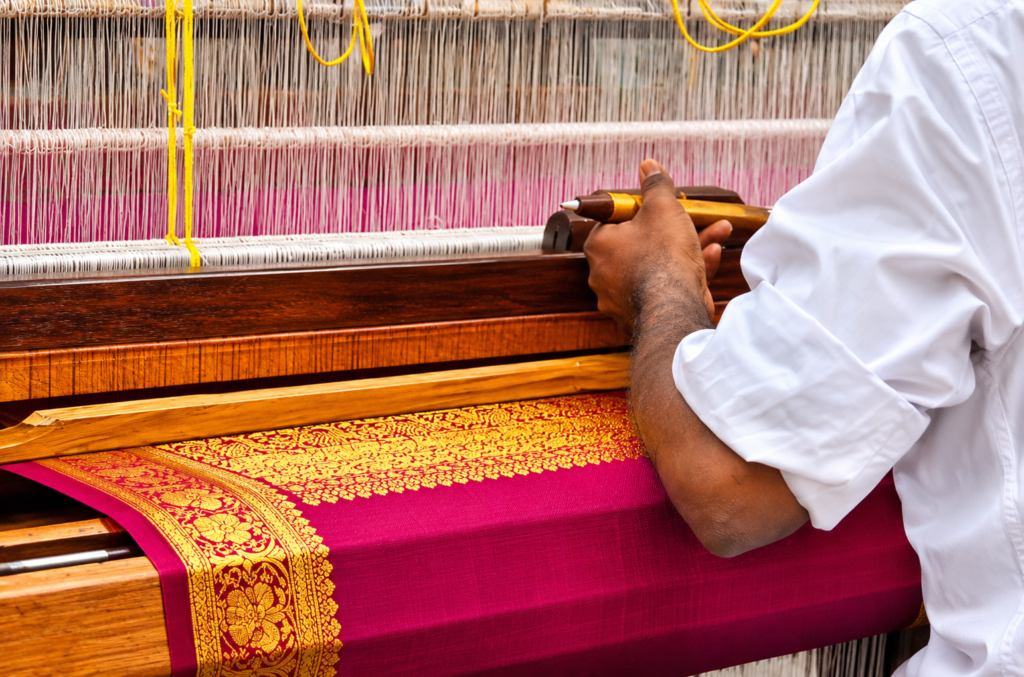
Five checks before you choose.
Ask how it was woven
Confirm the fibre
Look closely
Check any certification claim
Choose for your needs
A little more clarity.
No. Handloom describes the weaving method. Pure silk describes fibre composition. A handloom saree may be cotton, silk, a blend or another fibre.
Handloom is valued for manual craftsmanship and heritage. Either method can produce well-made or poorly made fabric. Compare yarn, weave, finish and suitability for your needs.
Manual labour, slower production, design complexity, yarn and finishing can affect the price. Cost alone does not establish handloom origin.
Do not assume so from the style name. Confirm the weaving method and claimed origin of the individual product.
No. Some handwoven fabrics have subtle variations, while others are very uniform. Major defects should not be excused as evidence of handcraft.
Follow the care instructions for the specific fibre, dye, zari and decoration. Ask Vandana for guidance before washing a delicate or embellished saree.
Appreciate the craft.
Find your kind of beautiful.
- Ministry of Textiles: handloom and powerloom definitions
- Textiles Committee: official Handloom Mark scheme
- India Handloom Brand: traditional Mangalagiri weaving
- Textiles Committee: shuttleless loom training material
This guide explains weaving methods. It does not certify Vandana or any individual product. Confirm all fibre, origin and certification details for the item you choose.